GBAC 2025

When: October 15-18, 2025 Where: Reno Nevada Venue: Whitney Peak Hotel More information coming soon!

When: October 15-18, 2025 Where: Reno Nevada Venue: Whitney Peak Hotel More information coming soon!
Today, we recognize three sponsors, Lower Columbia Research at the Chewaucan Level and Legacy Anthropology and the Archaeological Society of Central Oregon (ASCO) at the Warner Level. Legacy Anthropology is a full-service archaeological consulting company established in 2019 providing archaeological and historic preservation consulting services throughout Washington State. They collectively have over 15 years of experience in cultural resource management on over 150 projects including surveys and construction monitoring for road improvements, utility upgrades, bridge replacements, commercial construction, and residential development. They are a certified Minority/Woman-owned business. To learn more, please visit https://legacyanthropology.com The ASCO is a group of amateur, avocational, and professional archaeologists who share common interests in the history and prehistory of central Oregon. Their primary goal is to stimulate public interest in the preservation and research of past lifeways. ASCO was organized in 1944 and has a current membership of over 100. To learn more, please visit https://ascoinfo.net/
Our final featured symposium is “Tracking the Human Landscape of the Old River Bed Delta at the Pleistocene-Holocene Transition, ” organized by Daron Duke and D. Craig Young. The latest archaeological finds from the Old River Bed delta reveal a distinguishing terminal Pleistocene component alongside telling new information about its ancient environment. The delta is best known for its early Holocene record, but these data allow for a richer temporal, spatial, and social context to be developed. The finding of human footprints presents an opportunity for even finer resolution. This symposium highlights the interdisciplinary and collaborative efforts now underway centered on examining people’s relationship with a once vast deltaic wetland as it rose, fell, and disappeared in the Bonneville Basin, the largest lacustrine basin in the desert west. In addition to the featured symposia and plenary session, we are also excited to host three general sessions of 10-12 papers each along with two poster sessions of 10 posters each. The 38th GBAC will be busy from start to finish! We would like to take this opportunity to thank three sponsors at the Chewaucan Level: ARH Archaeology and Architectural History, Codifi, and Dudek. ARH Archaeology and Architectural History, LLC (ARH) is a woman-owned,…
With just a little more than two weeks to go, we are excited to share the final GBAC program along with a few important announcements: To register for the conference and purchase banquet/fieldtrip tickets, please visit https://greatbasinanthropologicalassociation.org/gbac/gbac-registration/ Thank you for your continued support of the GBAA and GBAC. See you soon! The 38th Great Basin Anthropological Conference – Final Program
Today’s featured GBAC symposium is “In His Footsteps: Tom Connolly’s Legacy in Oregon Archaeology,” organized by Jaime Kennedy and Andrew Boehm. After 40+ years, Tom Connolly recently retired as the Director of Archaeological Research at the University of Oregon’s Museum of Natural and Cultural History. In addition to extensive work on the Pacific Coast and western inland valleys, his contributions to Great Basin archaeology span several decades. Tom’s research on perishable artifacts, lithics, and his decades-long collaborations to refine regional cultural chronologies spurred significant developments in our understanding of the Great Basin in deep history and will undoubtedly influence the trajectory of the discipline for years to come. He’s literally written the book on Oregon Archaeology and inspired generations of academic, agency, and CRM archaeologists. This symposium honors Tom’s legacy through a series of papers presented by friends, colleagues, and others influenced by his impressive career. We would like to take this opportunity to acknowledge three Mojave-level sponsors: the Far Western Foundation, Paleoscapes Archaeobotanical Services Team, and Thunderstones Lithic Consulting. The Far Western Foundation was established to advance the study and appreciation of western North American archaeology, ethnography and history, and provide avenues for individuals and organizations representing diverse cultural…
Today’s featured symposium is “Multi-Disciplinary Investigations of Cultural and Ecological Assemblages at the Paisley Caves in the Chewaucan Basin, South-Central Oregon.” The symposium features nine presentations highlighting ongoing work with the Paisley Caves assemblage. The Paisley Caves are unusually rich repositories of cultural and natural materials accumulated in deposits spanning 16,000 years in age. Located on the high shoreline of pluvial Lake Chewaucan in the Summer Lake sub-basin of the Chewaucan basin, these caves and rockshelters have been professionally investigated twice. First, by Luther Cressman in the period 1937-1940 and later by Dennis Jenkins and the University of Oregon field school between 2002 and 2011. Analyses of fish bone, isotopes, megafauna, small mammals, pollen, macrobotanical remains, birds, and insects assist in reconstructing the local ecology over a period of 16,000 years. A total of 353 radiocarbon dates has been obtained on artifacts, bones, cultural features, coprolites (human and non-human), and naturally accumulated plant and animal remains. Obsidian sourcing and hydration performed on >500 specimens provide new insight into the demography and mobility of local populations spanning >14,000 years. The analysis of human coprolites, perishable and non-perishable artifacts, and cultural features provides clarity into the lifeways and challenges of some of…
It is with excitement that we share the Preliminary Program for the 38th Biennial Great Basin Conference (GBAC) to be held in Bend, OR October 18-21st. With just under one month to go, things are coming together and we look forward to catching up with everyone soon. In the meantime, please review the Preliminary Program and the 160 paper and poster abstracts that will make this year’s conference a great one. To date, 17 vendors have reserved tables in the Book Room, ensuring that it will be a vibrant gathering place featuring a range of goods and services. We wish to share a couple of important announcements along with the Preliminary Program: Individuals wishing to donate to the GBAA may do so by visiting this page: https://greatbasinanthropologicalassociation.org/gbac/donate/ Thank you everyone for your continued support of the GBAC and GBAA. This year’s conference is going to be great one. Watch for more updates and news in the coming weeks! Preliminary Program for the 38th Biennial Great Basin Conference
Today’s featured symposium is “Tradition, Teaching, and Technology: Papers in Honor of Dan Stueber.” Dan’s career as an archaeologist spans four decades and has been marked by a devotion to understanding flintknapping and lithic technology. During that time, Dan has freely shared his extensive knowledge with both the professional and avocational communities, students, and Tribal members. Today, he is a leading researcher of the Western Stemmed Tradition (WST) in the American West and is working concurrently on several significant late Pleistocene and early Holocene sites in Oregon, Idaho, Nevada, and Utah. He is also firmly committed to collaboration with Tribal nations and works to share his knowledge with Indigenous communities. Finally, Dan has played an important role in the lives of countless students and professional researchers who share his passion for lithic technology. Papers in this symposium honor Dan by focusing on projects in which he has played an integral role or helped shape through his mentorship of researchers who will continue his legacy for decades to come. We would also like to recognize two organizations who have sponsored the GBAC at the Mojave Level, Great Basin Consulting Group and HRA, Inc. Great Basin Consulting Group, LLC, is a cultural…
Today’s featured symposium is “Exploring the Intersections of Human Ecology and Culture History in the Great Basin.” Evolution and ecology-minded Great Basin archeologists are often frustrated when their research ultimately falls back on historical explanation. Culture historians increasingly incorporate paleoecological information in their analyses, albeit often in the absence of models that might elucidate causal links between environmental and behavioral variability. This symposium presents the latest in research from these competing but also clearly interrelated (and arguably complementary) perspectives with an eye towards exploring how they might better inform one another to provide comprehensive explanation for the diversity of human behavior across the Great Basin. Today, we recognize two corporate sponsors: Chronicle Heritage at the Bonneville Level and Rondeau Archaeological at the Mojave Level. Chronicle Heritage is a global cultural and heritage resource management consultancy committed to the possibilities in a prosperous balance between the needs of the future and the uses of the past. Throughout their history, they have worked for clients in both the public and private sectors, guiding one successful project after another through the complex regulations that govern the management of prehistoric, historic, architectural, and paleontological resources. To learn more, please visit chronicleheritage.com
Today’s featured symposium is “Beyond Stones and Bones: Current Research on Fiber Artifacts in the Great Basin.” While much of the global archaeological record is dominated by stone and bone, the Great Basin boasts perhaps the most extensive, diverse, and ancient records of fiber artifacts in the world. Studies of plant and animal fiber artifacts in the region have traditionally focused on normative analysis, using structural traits to explore geographic and chronological patterning. More recent work has pioneered fiber identification techniques to better understand environmental context and land use strategies, explored the use of radiocarbon dating of fiber artifacts to achieve chronological control of disturbed contexts, and extracted microfossils from basketry to interpret dietary uses. This symposium examines the status of current research in Great Basin fiber artifacts and explores future directions for fiber investigations. We would also like to recognize sponsorship at the Lahontan Level by two companies, Archaeological Services LLC and WestLand Resources. Archaeological Services LLC (ASCC) is based out of Vancouver, WA. They have grown from a one-person operation working solely in Clark County to a firm that employs six full-time archaeologists who carry out projects throughout the Pacific Northwest. To learn more about ASCC, please visit https://archaeologicalservices.com/about-ascc/…
The submission portal for presentations and posters is now closed. The 38th GBAC will feature 159 presentations and posters organized into one plenary session, nine symposia, 2-3 general sessions, and two poster sessions. Watch for the Preliminary Program on the GBAA website and Facebook page in the next 7-10 days. It’s going to be a great conference, with everything you have come to expect from the GBAC as well as a Keynote Lecture by Dr. David Hurst Thomas at Friday evening’s banquet. So, what now? Here is how you can help make this year’s GBAC a success: 1. Register in advance and book your hotel room. The Riverhouse is sold out of rooms for Wednesday, October 18th but there are still rooms available at the conference rate of $120-135/night for Thursday, October 19th and Friday, October 20th. Riverhouse rooms are still available at the non-conference rate for Saturday, October 21st. To register for the conference, please visit: https://greatbasinanthropologicalassociation.org/gbac/gbac-registration/ To book your Riverhouse room, please visit: https://greatbasinanthropologicalassociation.org/gbac/venue-hotel/ In the event that Riverhouse rooms are unavailable for the dates you need, the Red Lion Inn & Suites (541-388-4114) is offering rooms at a comparable price and is located just across the street from the Riverhouse. 2. Reserve a spot…
Today’s featured symposium is “From Channel Flakes to Bison Jumps: Current Archaeological Investigations”, organized by Suzann Henrikson. The 11 papers in this symposium promise to enrich our understanding of a range of topics. Analysis of the Pewaishe Suakiga debitage assemblage sheds light on Folsom technology in the Pioneer Basin, while new AMS assays and protein residue analyses address the Folsom mammoth hunting proposition in Owl Cave. The source attributions of volcanic glass Haskett points from the eastern Snake River Plain (including the Haskett type site specimens) suggest land use patterns in contrast with regional fluted assemblages. Recent analyses indicate that the Owl Cave bison bone bed represents a single early Holocene mass kill likely executed as an organized communal event with strong evidence for gourmet processing behaviors. Stable isotope values provide much needed insights regarding the seasonality of the mass kill. Potential changes in land use and mobility at the Early Holocene/Middle Holocene transition are examined via geospatial and XRF analyses of volcanic glass projectile points. Recent excavations in the Birch Creek Valley provide evidence of increased hunting success during the late Holocene, due in part to the use of bow and arrow technology. The natural landscape at Buffalo’s Little…
Today’s features GBAC symposium is “Recent Research in Fremont Studies,” organized by David Yoder, Scott Ure, and Michael Searcy. Fremont cultures of the eastern Great Basin and northern Colorado Plateau continue to simultaneously fascinate and puzzle archaeologists working in the region. Recent excavations, analysis of museum collections, application of technology, and reanalysis of previous held ideas and data are helping to us to better understand Fremont peoples and systems. The papers in this symposium highlight some of the current Fremont studies being performed by archaeologists in academia, government, museums, and the private sector. We also wish to recognize two additional sponsors at the Bonneville Level, Broadbent and ASM Affiliates. Broadbent offers Cultural Resource Management (CRM) services in support of projects in development, infrastructure, mining, and renewable energy. Their CRM team has project experience throughout the Intermountain West. Broadbent’s archaeologists and architectural historians understand how to guide projects through federal, state, and local laws to ensure cultural resources projects are completed on time and on budget. For more information, please visit broadbentinc.com/services/cultural-resource-management/ ASM Affiliates is a professional cultural and heritage resources management consulting firm with over 40 years of experience providing archaeology, historic preservation, GIS, drone, and other specialized services throughout the…
Today’s featured GBAC symposium is “A 6,500-year Record of Indigenous Occupation and Environmental Change at Payahuunada (Owens Lake),” brought to us by our good friends at Far Western Anthropological Research Group. The symposium will present the results of recent archaeological investigations at 59 component areas located within a highway construction corridor along the west shore of Owens Lake, California. Dating from the Middle Holocene through the mid-20th Century ethno-historic period, the archaeological record provides a window into Native responses to changing climates and lake levels, as well as to later-dating colonial intrusion. The project area is the ancestral home of the Paiute/Shoshone and is of high significance to contemporary Native people throughout eastern California. The symposium reviews Native perspectives of the archaeological record and other important tribal resources through the ongoing development of a Traditional Cultural Landscape. We also wish to recognize sponsorship at the Bonneville Level by two organizations, Far Western Anthropological Research Group and Archaeological Investigations Northwest. Since 1979, Far Western has worked in partnership with private industry, government agencies, tribal organizations, and non-profit groups to achieve the broader goals of the environmental review and compliance process. Today, they are recognized as one of the leading cultural resources…
Megan McGuinness is currently residing in La Grande, Oregon. She graduated from the University of Nevada, Reno with an MA Anthropology, and BS in Anthropology / Sociology with a minor in Native American Studies from Eastern Oregon University. When she is not walking pluvial lake shorelines, she is painting pictures of landscapes seen during archaeological projects. Megan believes. . .
2023 Plenary Session: Beyond Boundaries Bend sits in the heart of Oregon, where the Great Basin, Columbia Plateau, and Pacific Northwest come together. The people who have lived in the area since time immemorial defy easy assignment to one of these culture areas. Instead, their traditional lifeways feature elements drawn from each region, emphasizing that the Great Basin has always been part of a broad social and economic fabric. In recognition of this fact, the theme of this year’s Plenary Session is Beyond Boundaries. Our carefully curated set of presentations highlights recent work that crosscuts geographic boundaries, like those which intersect near this year’s conference location, but also methodological, political, temporal, and theoretical boundaries. We hope that the plenary presentations will collectively inspire attendees to reflect on their own work and consider how they might move beyond boundaries to conduct more innovative, collaborative, and relevant research as our field continues to evolve.
The University of Oregon Museum of Natural and Cultural History is the official partner of the 38th Great Basin Anthropological Conference. The Museum has committed generous financial and logistical support for this year’s GBAC and Museum staff have volunteered their time and efforts to make it a great one. For more information, please visit https://natural-history.uoregon.edu/
2023 GBAC Planning Committee would like to announce that the submission deadline will be extended to Friday, September 8th at 4pm (PST). Please login and submit papers and posters at your earliest convenience on the Presentations page of our website: GBAC 2023 Presentation Submissions
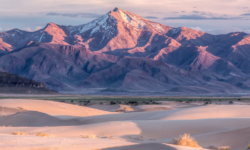
Dear members of the GBAA and attendees of the GBAC, I’m writing to convey to you the results of the April board of directors meeting of the GBAA. In that meeting, the board addressed the dire financial circumstances facing the GBAA and how to rectify these circumstances. I’m writing to you to make clear what these circumstances are and the methods the board has developed to improve our fiscal situation. Historically, the GBAA has been funded solely by proceeds from the biennial GBAC meetings. Below-average attendance at both the Salt Lake City meetings and the Las Vegas meetings resulted in net losses for each meeting. Combined with yearly costs associated with maintaining the GBAA website, paying for email services and maintaining a PayPal account (these average ~$1200/yr), the first down payment for the upcoming GBAC in Bend, Oregon ($2500), costs associated with postponing the Las Vegas GBAC due to Covid (we fell behind a whole year in income due to having to postpone the meetings), and other small costs like bank fees, we are currently left with a budget of only about $1300. We need to pay the venue in Bend another $5000 by the end of the year to…
We are excited to announce The GBAA’s newest Platinum Sponsor! Big Thanks to the International Association of Obsidian Studies. Find out more about IAOS on their website.
University of Utah Press is our Platinum Sponsor for 2020-2021. Thank you for your support! Please visit and purchase from U of U Press using the GBAC LINK.